

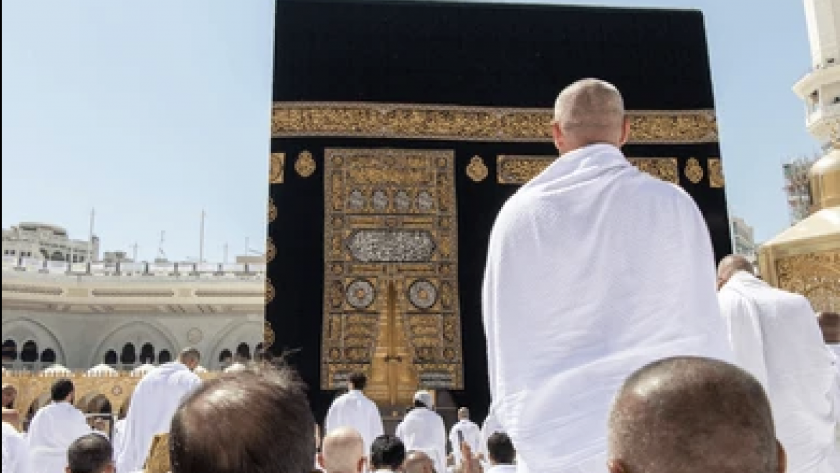
Being Muslim, most of us grow up carrying one quiet daydream in our hearts. We may not know when it will happen. We may not know how Allah will make it possible. Yet the image of the Kaaba lives within us long before the journey ever begins. It appears in our childhood duas, in framed photos at the mosque, in stories elders tell with voices that soften mid sentence. Even when Umrah feels distant or out of reach, the first sight of Kaaba remains alive inside us, waiting patiently, and preparing.
Over time, that image becomes deeply personal. We imagine the moment our eyes finally fall upon the Kaaba, the moment our heart melts and fills with a strange purity, the moment we realise with complete humility that Allah chose us. That sense of being chosen, of being invited, is what makes Umrah unlike any other journey. It is not simply travel, it is spiritual preparation. It is a call that reaches the heart long before it reaches the calendar.
This is why the first sight of Kaaba carries such emotional weight. It is not only about what you see. It is about everything that led you there and everything you quietly carried with you along the way.
The journey before the moment arrives
Long before you enter Masjid al Haram, your heart begins to change. In the days leading up to Umrah, many pilgrims notice subtle shifts within themselves. Conversations feel slower and lighter. Certain worries lose their urgency. There is an awareness that something meaningful is approaching, even if it cannot yet be named.
At home, spiritual preparation becomes more than packing. Folding clothes feels intentional. Choosing what to carry feels symbolic. Ihram is placed carefully, almost respectfully, as if acknowledging what it represents. At the same time, doubts surface. Am I ready? Have I done enough? What if my heart does not feel the way I imagine it should. These questions are common, especially among first time pilgrims, and they are part of preparing your heart for Umrah.
At the airport, excitement blends with vulnerability. Surrounded by movement and noise, many pilgrims feel unusually quiet inside. There is anticipation, but also fear of the unknown. What helps in this moment is remembering that Umrah is not about perfection. It is about intention and sincerity.
During the flight, reflection deepens. Looking down at the world from above often brings perspective. Problems that once felt overwhelming begin to feel smaller. Duas come more easily. Tears sometimes appear without warning. For many, this is the first time they feel the weight of the journey emotionally, not just logistically.
By the time you land, your body may feel tired, but your heart is alert. You are closer now. The distance between longing and reality has narrowed.
Approaching Makkah and the Haram
The drive toward Makkah is a moment many pilgrims remember vividly. As the landscape changes and signs shift, the realisation sets in that you are nearing the place your heart has faced in prayer your entire life. Conversations often fade into silence, not because there is nothing to say, but because words suddenly feel inadequate.
When you finally approach Masjid al Haram, your senses awaken all at once. The sound of the adhan feels heavier. The air carries an atmosphere of devotion. Faces from every corner of the world move with shared purpose. At this stage, the first sight of Kaaba is no longer a distant dream. It is moments away.
Your steps naturally slow. Your breathing changes. You become deeply aware of your own presence and smallness. This approach itself becomes part of preparing your heart for Umrah, allowing anticipation to soften into humility.
Experiencing the first sight of Kaaba
Nothing truly prepares you for the first sight of Kaaba. Despite years of imagining it, the reality arrives with an intensity that words struggle to capture. Some pilgrims stop walking entirely, overwhelmed by the moment. Others burst into tears before they fully realise what they are seeing. Some feel a deep stillness settle over them, as if the world has briefly paused.
Many pilgrims describe this moment differently. One person shared that they wanted to make a long dua but found themselves unable to speak, repeating Alhamdulillah through tears. Another described feeling calm rather than emotional, later realising that peace was exactly what their heart needed at that time.
The first sight of Kaaba does not follow a script. There is no single correct reaction. Some hearts open instantly. Others take time to soften. What matters is understanding that whatever you feel in that moment is valid. Allah meets hearts where they are, not where they are expected to be.
This is why the first sight of Kaaba should be approached with openness rather than expectation. It is not a test of faith. It is a meeting that unfolds uniquely for every pilgrim.
When emotions feel overwhelming
For many first time pilgrims, emotions surface with unexpected intensity. You may cry more deeply than you ever have. You may feel exposed, small, or unworthy. Gratitude may overwhelm you to the point where it feels physically heavy. These reactions can feel surprising, even unsettling, especially when surrounded by thousands of people.
It is important to allow these emotions without judgement. The Kaaba has witnessed generations of tears, whispered duas, and silent fears. Your emotions are not out of place here. They are part of the sacredness of the moment.
Letting yourself feel freely is an essential part of preparing your heart for Umrah. When emotions are welcomed rather than suppressed, sincerity deepens naturally.
When emotions arrive slowly
At the same time, not every pilgrim feels an immediate emotional surge at the first sight of Kaaba. Some feel tired, distracted, or simply present. This experience is rarely spoken about openly, yet it is equally common.
If this happens, it does not mean your heart is closed. Often, the heart needs time to adjust to the scale, the movement, and the constant rhythm of worship within the Haram. Many pilgrims later discover that their most emotional moments came during tawaf, during a quiet prayer late at night, or even on the final day when leaving felt heavier than arriving.
The first sight of Kaaba is powerful, but it is only the beginning. Umrah reveals itself in layers, and each layer carries its own depth.
Spiritual grounding before Umrah
While planning Umrah involves practical arrangements, preparing your heart for Umrah is a spiritual process rooted in intention and surrender. At its core, Umrah traces back to the story of devotion shown by Prophet Ibrahim and Hajar. Their journey was marked by trust in Allah beyond comfort or certainty.
Standing before the Kaaba connects you to that legacy. It reminds you that faith is not built on control, but on reliance. Preparing your heart means renewing your intention quietly and often. It means acknowledging that you are answering Allah’s invitation as you are, with all your imperfections.
It also means consciously loosening your grip on worldly concerns. You do not need to resolve every issue before Umrah. You simply need to place them in Allah’s care.
Balancing expectations with trust
Many pilgrims carry unspoken expectations about how Umrah should feel. These expectations are often formed quietly over years, shaped by stories, images, and the experiences of others. While hope is natural and healthy, rigid expectations can create subtle pressure, pulling the heart away from presence and into comparison.
Preparing your heart for Umrah means gently loosening these expectations and replacing them with trust. Trust that Allah knows the state of your heart better than you do. Trust that He will meet you in the way and at the time that is best for you. When expectations soften, space opens for sincerity, allowing the experience to unfold without force.
Some pilgrims feel immediate awe at the first sight of Kaaba, as if their heart responds instantly to the long awaited meeting. Others need time, days of prayer, tawaf, and quiet moments before the depth of the experience settles in. Both journeys are valid. Both are meaningful. Neither is a reflection of stronger or weaker faith.
What matters most is allowing your Umrah to unfold naturally, without measuring your emotions against anyone else’s. Comparison has no place in worship. Each heart arrives carrying its own history, wounds, and hopes. When you allow your experience to be uniquely yours, trust replaces pressure, and presence replaces expectation.
Why reliable logistics matter for the heart
Spiritual focus is deeply affected by practical stability. Uncertainty around transport, hotel access, or navigation can quietly pull attention away from worship and into anxiety. For first time pilgrims especially, this mental load can interfere with the ability to remain present during sacred moments.
This is why reliable ground arrangements are not merely convenient but protective of the heart while preparing your heart for umrah. When accommodations are close to the Haram, when transport is dependable, and when on ground support is available, mental stress decreases. As a result, the heart remains freer to engage spiritually.
Zamzam exists quietly within this space. By handling verified hotels near the Haram, reliable transport, and on ground support, Zamzam removes unnecessary friction from the journey. When the practical how is taken care of, pilgrims are better able to focus on the why.
Experiencing the Kaaba beyond the first sight
While the first sight of Kaaba leaves a powerful and unforgettable imprint on the heart, many pilgrims slowly realise that the deepest transformations often happen after that initial moment has passed. Once the intensity settles, the heart begins to listen more closely. The noise fades. The rush quiets. What remains is a steady unfolding of meaning preparing your heart for umrah.
For many, tawaf becomes the point where understanding deepens. Walking around the Kaaba again and again, shoulder to shoulder with people from every corner of the world, creates a rhythm that gently pulls the heart inward. Each step feels purposeful. Each round strips away distraction. Over time, movement and intention begin to align. What starts as physical effort turns into quiet surrender. In those moments, pilgrims often feel a profound sense of belonging, as if their individual story has merged into something far greater.
Late night prayers bring another layer of intimacy. When the crowds thin and the Haram feels calmer, space opens for reflection. These are often the moments when buried emotions rise to the surface. Gratitude, regret, hope, longing, all finding their way into whispered duas. Many pilgrims say it is during these quieter hours that they feel truly seen and heard by Allah, without performance, without pressure, just presence.
Even moments of exhaustion carry wisdom. Tired feet, aching backs, and long walks between prayers remind pilgrims of humility and dependence. When energy runs low, sincerity often rises. In those moments, worship becomes less about form and more about truth. A simple dua, offered with a tired heart, can feel more meaningful than the longest planned prayer.
Umrah, in this way, is not defined by a single instant or emotion. It is shaped through accumulation and preparing your heart for umrah. Each prayer strengthens the next. Each step prepares the heart further. Each quiet dua builds upon the last. The Kaaba does not rush transformation. It allows it to unfold gently, meeting each pilgrim at the pace their heart is ready to move.
Carrying the moment forward
Many pilgrims quietly worry about losing the feeling of the first sight of Kaaba once they return home. There is a fear that the closeness they felt, the softness in the heart, or the clarity in worship might fade with time and routine. This concern is natural, especially after experiencing something so sacred and emotionally intense.
In reality, the memory of the Kaaba does not disappear. It settles. Rather than staying loud or overwhelming, it becomes integrated into the heart in subtle ways. You may notice more patience in moments that once triggered frustration. You may feel a stronger pull toward prayer, even on ordinary days. You may find yourself pausing before reacting, remembering how small you felt standing before Allah’s House.
The change is rarely dramatic. It does not announce itself. Instead, it shows up quietly in how priorities shift and how gratitude surfaces more easily. The impact of Umrah often reveals itself slowly, long after the journey has ended, when you respond differently to trials or when your heart turns instinctively toward Allah in moments of need.
The Kaaba changes people through presence rather than spectacle. It does not rely on constant emotion to leave its mark. Its influence unfolds gently, often when least expected, shaping the heart in ways that only time can fully reveal.
A final reflection before you go
You are not expected to arrive for Umrah as a finished person. You are invited as you are, carrying your hopes, fears, and unanswered questions. The first sight of Kaaba is not about proving faith, but about meeting Allah with honesty and preparing your heart for umrah.
When the time comes, let Zamzam handle the ground logistics so your heart can remain focused. Let your journey be supported, your worries eased, and your attention preserved for what truly matters.
May the first sight of Kaaba meet a heart that has been preparing quietly all along.
