

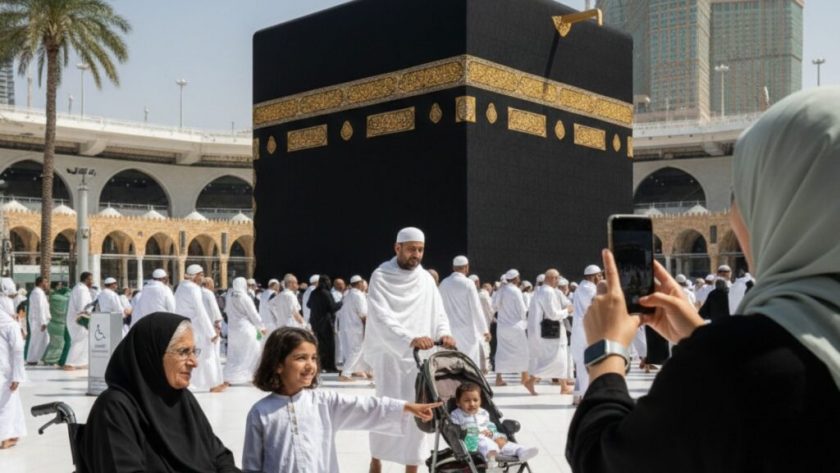
There is a moment that arrives quietly for many Muslims and in our hearts we all wait for this moment. Some of us are so lucky they receive this call from the Almighty soon while others have to wait and pray. One more aspect is going on this spiritual journey with parents or elderly is a true blessing. Sometimes it comes after a parent’s illness. Sometimes after noticing they walk a little slower than before. However, sometimes simply with age. The thought settles gently but firmly in the heart: “I want to plan Umrah with my parents.”
For Muslims in the UK and US, this intention carries a different weight than planning Umrah alone. It is filled with love and gratitude, but also with anxiety. You are no longer only responsible for your own worship. You are responsible for comfort, safety, pacing, and dignity for the people who once and for years carried you without hesitation.
This guide is written for that exact place. For those thinking, “I want to take my parents for Umrah, but I’m worried about their health, their strength, and whether I can truly manage this.” It is both practical and spiritual, because this journey requires both.
The Emotional Weight of Umrah with Elderly
Umrah with elderly parents is not simply a family trip. It is an act of service and gratitude. A living expression of birr al-walidayn.
Many sons and daughters experience an unexpected emotional shift even during planning. You begin to realise that your Umrah will look different. It is a true fact that you may not complete multiple Tawafs. You may miss congregational prayers in the Haram. You may even spend long moments sitting quietly beside your parents instead of moving forward.
But think about it in another way, this is not a loss. This is purely a transformation that is leading you to a journey that is exceeding in spirituality.
Serving your parents, slowing your pace, choosing their comfort over your schedule, these are not distractions from worship. They are a worship and you should have believed Allah Almighty will love your act and your kindness with your parents/elderly.
“Are My Parents Too Old for Umrah?”
This is one of the most searched, and most unspoken, questions. We know you are also secretly looking for this. The honest answer is this: age alone does not determine readiness. What matters is physical capability, medical stability, and thoughtful planning.
The beauty of Islam is it does not demand hardship where ease is available. Elderly parents are not expected to perform Umrah in the same way younger pilgrims do. Tawaf can be paced. Saʿi can be assisted. Prayer can be seated. Rest can be prioritised.
When Umrah is planned around elderly needs, not around unrealistic expectations, it becomes both possible and deeply meaningful.
Understanding the Physical Demands of Umrah
To plan ahead and responsibly, it helps to understand the physical reality of Umrah beyond how it looks on screen or in photographs. The sacred rites are beautiful, but they are also physically demanding, especially umrah for elderly parents whose strength and stamina may no longer be what they once were.
Tawaf
Tawaf alone involves almost 1.5 to 2 kilometres of continuous movement around the Kaaba. Although this distance might seem manageable, it is often performed while standing for long periods, moving slowly through crowds, and adjusting pace constantly. For elderly pilgrims, the challenge is not just the distance, but the combination of standing, gentle pushing from surrounding worshippers, and the need to remain focused and balanced throughout all seven circuits.
Saʿi
Saʿi, the walk between Safa and Marwah, adds another 3 kilometres. Although much of the path is now climate-controlled and smooth, it still requires sustained walking, occasional changes in pace, and mental focus. Umrah for elderly parents may feel this most in their knees, lower back, and feet, especially if Saʿi is attempted immediately after Tawaf without sufficient rest.
There are numerous factors that contribute to overall fatigue other than the rituals themselves, including the heat of the day, standing for long periods of time, and the density of the crowds. Even when it is cooler out, the body will heat up quickly in crowds. Older pilgrims can dehydrate more quickly and become fatigued sooner, and also become overwhelmed due to the noise of crowds and the movement of pilgrims before they realize they need to take a break to rest.
Another often overlooked factor when planning Umrah with family, especially for those thinking “I want to plan Umrah with my parents,” is the distance between accommodation and the Haram compound. Walking from the hotel to the mosque, navigating entrances, waiting for elevators, and returning after prayer can add several more kilometres each day. These cumulative movements are what usually exhaust elderly parents, not the rituals alone.
For this reason, Umrah with elderly parents is manageable only when walking distance, step-free access, reliable elevators, and regular rest breaks are built intentionally into the plan. When these elements are considered early, the physical demands of Umrah become something that can be approached calmly, safely, and with dignity, rather than something to be endured.
Mobility Considerations: What Families Often Miss
Walking Distance Is the Biggest Hidden Risk
Many families rely on hotel descriptions such as “five minutes from the Haram,” assuming this means an easy and direct walk. In reality, that short distance can involve inclines or stairs, uneven pavement, crowded pedestrian crossings, or long internal corridors inside hotel complexes. During busy prayer times, it can also mean waiting fifteen to twenty minutes for elevators, which quickly drains energy before worship even begins.
For an elderly pilgrim, even an extra few hundred metres walked several times a day can turn what should be a calm act of worship into physical strain. Fatigue often builds quietly, and by the time it is felt, it is already too late to recover easily.
For this reason, ZamZam’s hotel verification process includes actual elevator access checks and step-free path confirmation, assessed at an elderly walking pace. These details are not minor conveniences; they are decisions that directly protect comfort, safety, and dignity throughout the journey.
Wheelchairs, Walking Aids, and Removing the Stigma
Many elderly parents feel hesitant about using mobility aids. They worry it may signal weakness or that their worship will somehow be less meaningful. These concerns often come from a lifetime of independence and quiet dignity, and they deserve to be met with patience rather than pressure.
A gentle reminder that ease is part of the Sunnah, that intention is more important than physical effort, and that preserving one’s strength will allow the heart to be present in worship will help allay the fears of elderly parents. Older pilgrims use both wheelchair-assisted Tawaf and Saʿi as valid options.
Many families find balance through a mixed approach, walking when energy allows, using assistance when fatigue appears, and resting without guilt. What matters in the end is not how much is completed, but how sincerely the heart is engaged throughout the journey.
Managing Fatigue Without Guilt
One of the hardest things for caregivers is letting go of guilt. Many sons and daughters feel pressure to do everything “properly,” even when their parents are clearly tired. In reality, elderly parents do not need to attend every congregational prayer in the Haram, complete Umrah quickly, or keep pace with group schedules that are designed for younger pilgrims.
Very often, the most meaningful worship happens while sitting quietly, making dhikr, or resting between prayers. Allowing space for this is not a compromise; it is part of caring well. The On-Journey Companion used by ZamZam helps families recognise early signs of fatigue and suggests rest windows in real time, so pauses happen before tiredness turns into hardship.
Hotel Selection for Elderly Parents
Makkah
For elderly parents, hotel priorities in Makkah should be:
- Short, flat walking routes
- Step-free access
- Reliable elevators
- Proximity to pharmacies and medical facilities
Clock Tower hotels offer unmatched proximity, but not all exits or room locations are suitable for elderly guests. Jabal Omar hotels, when carefully selected, often provide a better balance of access and comfort.
ZamZam ensures mobility-aware hotel selection, not marketing-driven choices.
Madinah
- Madinah is calmer, but elderly parents still benefit from:
- Hotels on the north side of Masjid an-Nabawi
- Shaded walking paths
- Easy vehicle access
Many families choose hotels slightly farther away and rely on transport to preserve energy.
Ground Transport
Shared shuttles often mean rushing, standing, and following fixed schedules. For elderly parents, this can quickly become exhausting and stressful, especially after long prayers or walking inside the Haram.
For families travelling from the UK, the US, or Canada, private ground transport offers much more control. It allows you to move at your parents’ pace rather than keeping up with a group. ZamZam’s ground transport for elderly-inclusive journeys uses private vehicles with mobility assistance, so families can avoid unnecessary physical strain and return to the hotel as soon as parents feel tired, not when a timetable demands it.
This single factor often defines whether the journey feels calm or overwhelming.
Crowd Psychology
Crowds affect elderly parents very differently than they do younger pilgrims. What might feel manageable to you can feel confusing or even frightening to someone who is older, especially when movement becomes unpredictable. Tight spaces, sudden surges, and constant noise can quickly cause anxiety, particularly if a parent worries about losing sight of family members.
This is why staying physically close matters. Walking as a unit, choosing clear visual landmarks, and moving slowly can make a big difference. Many families also find that worship feels far calmer during quieter hours, such as late at night or early after Fajr, when the space opens up and movement feels gentler. Avoiding peak post-Maghrib congestion and planning Friday prayers well in advance can also reduce stress significantly.
With elderly parents, knowing when not to move is just as important as knowing when to go. Pausing, waiting, or choosing a quieter moment often protects both their comfort and their peace of mind.
Visa, Vaccines, and Documentation for Elderly Travellers
For UK, US, and Canadian travellers, the Saudi tourist eVisa allows Umrah outside Hajj season.
For elderly parents, additional preparation is wise:
- Carry medical letters outlining conditions and medications
- MenACWY vaccination is up to date
- Consider flu and COVID boosters based on medical advice
- Choose travel insurance that covers pre-existing conditions
Having documentation ready reduces anxiety and delays.
Spiritual Preparation for Umrah with Parents and Caregivers
This journey transforms both the parent and the child.
Caregivers often find themselves tested. Patience wears thin. Guilt appears. Fatigue sets in. This is where the deeper lesson lies.
Serving your parents, adjusting expectations, and accepting limits is part of the worship. Many return saying, “I didn’t perform as much as I planned, but I changed.”
Real Reflections from UK and US Families
A family from Manchester shared:
Our rush contributed to a very smooth trip. My dad had to rest during Umrah at times and his dua after completion was unlike any I had ever experienced in my life.”
Another traveller’s thoughts:
“I was able to make my Umrah with my mom just holding her hand during Tawaf.”
These types of accounts are very common; they illustrate that when performing Umrah with our parents, it is not about how much we do, but how much we mean to each other.
Practical Checklist for Umrah with Elderly Parents
Before Departure
Make sure the basics are settled early. Confirm that your hotel is genuinely close to the Haram and that the walking route is step free, with reliable elevator access. Arrange private ground transport in advance so your parents are not dependent on rushed group shuttles. Speak to your GP for travel clearance if needed, and prepare all medications, prescriptions, and mobility aids well before departure.
During the Journey
Once you arrive, let comfort guide your decisions. Prioritise rest over strict schedules, and adjust prayer timings to suit your parents’ energy levels. Encourage regular hydration, seek shade whenever possible, and do not hesitate to use wheelchairs or assistance when fatigue appears. Small pauses throughout the day prevent exhaustion later.
After Umrah
Allow time for recovery once Umrah is completed. Keep the days in Madinah calm and unhurried, with plenty of rest between visits to the mosque. Take quiet moments to sit together, reflect, and talk about the journey. For many families, these gentle conversations become some of the most meaningful parts of the experience.
FAQs
Q.What if my parents cannot walk long distances?
Well this is very common and completely manageable. Now wheelchairs are widely available in Makkah and Madinah, and Tawaf and Saʿi can be completed using wheelchair-accessible paths. Many families use a mixed approach, walking when possible and using assistance when fatigue appears. The most important thing is that worship is judged by intention, not physical strain.
Q. Do elderly parents have to complete Umrah in one go?
No, as Islam always preaches about ease so, there is no requirement to rush. Tawaf and Saʿi can be spaced out with rest in between if needed. Some elderly parents rest for several hours or even overnight between rituals. What matters is comfort, safety, and sincerity, not speed.
Q. Are the crowds safe for elderly parents?
Crowds can feel overwhelming for any age but it can overwhelm elderly pilgrims. This is always highly recommended to choose quieter worship windows, staying close together as a family, and avoiding peak congestion periods greatly reduces stress.
Q.What if my parents get tired or unwell during Umrah?
Fatigue is common and should be expected. A few things you should take care of are resting early that prevents bigger problems later. But in unfortunate situations you will see Saudi Arabia has excellent medical facilities, pharmacies are easily accessible, and most hotels are familiar with assisting elderly guests.
Final thoughts
For many people, the thought begins simply: “I want to plan Umrah with my parents.” What follows is an act of patience, love, and surrender. This journey teaches you to slow down, to notice what truly matters, and to serve quietly without expectation. When you place your parents’ comfort before your own plans, you embody the spirit of Umrah in its most sincere form.
When you are ready to plan, ZamZam takes responsibility for your parents’ comfort and safety on the ground through verified hotel access, private mobility-aware transport, and real-time support throughout the journey, so you can focus on serving them with a peaceful heart.
