

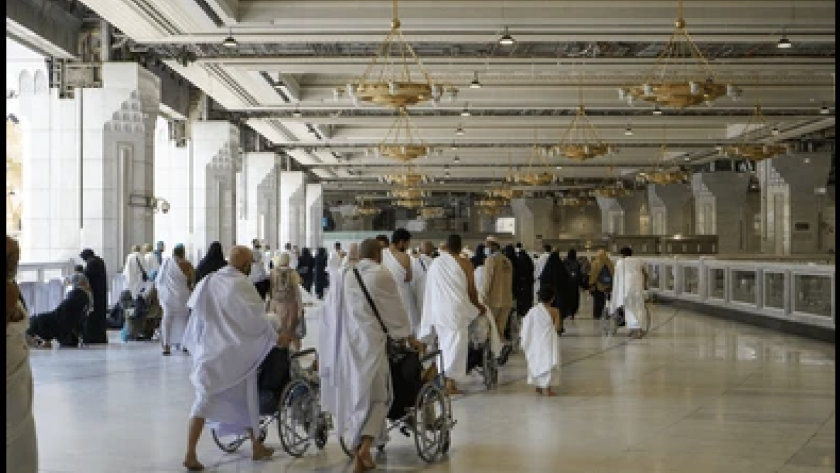
For many of us living with mobility challenges, the desire to perform Umrah never fades. It lives quietly in the heart, just as strong and just as sincere as anyone else’s. Yet alongside that longing often sits another feeling that is harder to speak about. Fear and being honest is the fear of being a burden. Fear of slowing others down. Fear of not being able to move through the Haram with dignity. Or if you are blessed with this holy journey along with your elderly or ones with mobility challenges , you are probably searching for ways that can help you here.
If you are reading this, it is important to hear this clearly from the beginning. Your physical limitations do not diminish your right to perform Umrah. Needing assistance does not reduce the value of your worship. Islam never ties closeness to Allah to physical strength. It ties it to intention.
Umrah wheelchair assistance at Masjid al-Haram is not a concession or a special favour. It is a recognition that worship belongs to everyone.
This guide is written for those planning an umrah wheelchair journey, for families supporting a loved one, and for anyone quietly wondering whether disabled umrah is truly manageable. It is also written to show how Zamzam takes responsibility for mobility-friendly Umrah in a way that protects dignity, not just logistics.
You are not asking for too much
Many pilgrims with mobility challenges hesitate even before planning begins. The hesitation rarely comes from lack of desire. It comes from fear. Fear of inconveniencing others. Fear of moving too slowly in crowded spaces. Fear of being looked at with impatience or pity. Some worry about needing help too often and silently question whether their presence will make the journey harder for the people around them.
These worries are deeply human, but they are not reflections of reality in the Haram.
The Haram is a place built on mercy, not measurement. Every day, thousands of pilgrims perform Umrah using umrah wheelchairs, walking aids, or assisted support. They move through the same spaces, offer the same prayers, and stand before the same Kaaba with sincerity and devotion. You are not unusual. You are not an exception. And you are certainly not a burden.
Wheelchair assistance at Masjid al-Haram exists because the right to worship with dignity is fundamental in Islam. The infrastructure, the staff, and the systems are designed to support worshippers, not to judge them. Assistance is not an interruption to worship. It is part of how mercy is expressed on the ground.
What matters most is not whether assistance is needed in mobility-friendly umrah, but whether that assistance is planned properly. When care and preparation replace anxiety, the journey becomes calmer. And when the journey is calm, the heart is free to focus on what truly matters.
Understanding wheelchair accessibility at Masjid al-Haram
Over the years, significant improvements have been made to accessibility haram infrastructure. Today, Masjid al-Haram is one of the most mobility-aware religious spaces in the world.
There are wheelchair-accessible gates clearly marked and supported by staff. Dedicated pathways allow wheelchair users to move through the Haram without navigating steps or uneven flooring. The marble floors are smooth and designed to reduce resistance when pushing a wheelchair. Ramps and elevators connect different levels, allowing access without reliance on stairs.
Wheelchair assistance at Masjid al-Haram is thoughtfully integrated rather than isolated. This means pilgrims using wheelchairs are not pushed to the margins. They worship alongside everyone else, with dignity intact.
That said, wheelchair accessibility haram on paper and wheelchair accessibility haram in practice are not always the same. Timing, crowd levels, and route knowledge make a significant difference in how smooth the experience feels during mobility-friendly umrah.
Wheelchair options inside the Haram
One of the most common concerns for umrah wheelchair pilgrims is deciding whether to bring their own wheelchair or rely on the options available inside the Haram. This decision often feels heavier than it should, especially for first time pilgrims who are unfamiliar with how mobility support works on the ground.
Masjid al-Haram provides free wheelchairs that can be used within the Haram itself. These wheelchairs are widely available, regularly maintained, and supported by staff who understand how to assist pilgrims respectfully. For many people, this option removes the stress of transporting a personal wheelchair across long distances or through crowded areas.
For pilgrims who prefer more independence or require additional support, rental options are also available, including electric wheelchairs operated by trained attendants. These services can be particularly helpful during Tawaf and Sa’i, when energy levels may drop and crowd navigation requires experience. Knowing that trained assistance is available brings reassurance and allows pilgrims to focus on worship rather than logistics.
Some pilgrims choose to bring their own umrah wheelchair, especially if they have specific medical needs, custom seating, or comfort requirements. This can work very well, but only when the rest of the journey is planned with the same level of care. Transport vehicles must accommodate the wheelchair safely. Hotels must offer true step-free access and usable elevators. Pathways must be assessed realistically, not assumed.
The key is alignment. Your umrah wheelchair choice should match your accommodation, your transport, and your physical capacity. When these elements are aligned, the mobility-friendly umrah journey feels supported rather than stressful. This is where thoughtful planning becomes essential rather than optional, transforming concern into confidence.
Tawaf and Sa’i with a wheelchair
One of the most emotional fears pilgrims express is whether Tawaf and Sa’i will feel meaningful if done in a wheelchair. It is important to say this gently but clearly. Worship is not diminished by assistance. Tawaf performed in a wheelchair carries the same sincerity when intention is present. Wheelchair-accessible routes are available for both Tawaf and Sa’i. These paths are designed to accommodate movement while managing crowd flow. Width and surface quality are considered, and staff are present to assist when needed.
During peak times, crowd navigation requires experience. Knowing when to perform Tawaf, which level to use, and how to avoid unnecessary congestion makes an enormous difference. Without guidance, the experience can feel overwhelming. With support, mobility-friendly umrah becomes manageable and spiritually grounding. Wheelchair accessibility Haram extends fully to the core rituals of Umrah. The question is not whether it is possible, but whether it is planned with care.
Why hotels matter more than people realise
For disabled umrah, the hotel is not simply a place to sleep between prayers. It becomes part of the worship journey itself. It is where the body recovers, where the mind settles, and where anxiety either eases or quietly builds. When mobility is limited, the environment you return to matters just as much as the sacred space you walk toward.
Many hotels describe themselves as umrah wheelchair friendly, but in reality this label can hide serious limitations for disabled umrah. An elevator may exist, yet be too narrow for a wheelchair to turn comfortably. An entrance may appear accessible, but include a single step that becomes an exhausting barrier after a long day. Bathrooms may technically meet requirements but offer no real space to move safely. Corridors may be long, crowded, or uneven, turning a simple walk into a struggle.
These details may seem small, but during Umrah they shape the entire experience. When returning from the Haram feels difficult, worship begins to feel heavy. When leaving the room requires effort and worry, the heart carries tension before the journey even begins.
Zamzam does not rely on labels or assumptions. Every hotel selected for mobility-friendly journeys is physically verified. Elevators are tested for real wheelchair use, not just presence. Step-free routes from the entrance to the room are confirmed, not guessed. Room layouts are checked for actual usability, ensuring space for movement, turning, and comfort rather than box-ticking compliance.
Wheelchair accessibility Haram does not start at the gates of the Haram for disabled umrah. It starts the moment you wake up. It starts with knowing you can leave your room without anxiety and return without exhaustion. When that certainty exists, energy is preserved, dignity is protected, and worship becomes the focus rather than the challenge.
Ground transport that protects dignity
Transport is one of the most overlooked challenges for umrah wheelchair pilgrims, yet it often determines how calm or stressful the entire journey feels. A vehicle that technically fits a wheelchair is rarely enough. What truly matters is how that transport experience unfolds in real life, especially when energy is low and crowds are high.
Timing plays a critical role. Being rushed between prayers, arriving late, or waiting unnecessarily while fasting can quietly drain both physical strength and emotional patience. Loading and unloading also matter deeply. When assistance feels hurried or awkward, it can leave a pilgrim feeling exposed or uncomfortable. Parking proximity is equally important, as being dropped too far from entrances can turn a short transfer into an exhausting effort. Staff awareness, sensitivity, and preparedness make the difference between support that feels respectful and help that feels burdensome.
Zamzam approaches transport with dignity as the starting point even for disabled umrah. Wheelchair-accessible vehicles are selected not only for space, but for ease of movement and stability. Drivers and assistants are briefed to support loading and unloading calmly, without rushing or drawing unnecessary attention. Drop-off and pick-up points are chosen based on proximity and wheelchair accessibility haram, not convenience or speed.
For families, this level of care removes a quiet but heavy worry. You are not forced to improvise. You are not left asking strangers for help or negotiating unfamiliar situations while exhausted. The journey moves at your pace, allowing the focus to remain on worship rather than logistics.
Accessibility haram planning without accessible transport is incomplete. Zamzam treats transport as part of worship support itself, understanding that when movement is handled with respect and foresight, dignity is preserved and the heart remains free to focus on what truly matters.
Actual journeys, actual outcomes
Many pilgrims with mobility challenges have completed Umrah successfully, peacefully, and with deep emotional fulfilment. Some were elderly parents supported by their children. Some were individuals recovering from surgery. Some lived with lifelong disabilities. What they shared was not frustration, but relief. Relief that they were not treated as an afterthought.
They speak of moments of deep emotion during Tawaf. Of tears during Sa’i. Of gratitude for being able to focus on worship rather than obstacles. These journeys work when dignity is protected. Not through sympathy, but through preparation.
How Zamzam verifies accessibility properly
Zamzam’s mobility verification process is hands-on and uncompromising. Hotels are not selected based on brochures. Physical checks are performed to confirm elevators, ramps, room access, and step-free pathways. Routes from hotel to Haram are assessed with real walking and wheelchair movement in mind.
Transport providers are vetted for actual wheelchair usability, not promises. On-ground Umrah support teams for disabled umrah are briefed in advance. Nothing is assumed. Wheelchair accessibility at Masjid al-Haram requires responsibility during mobility-friendly umrah. Zamzam accepts that responsibility fully. No surprises. No compromises on dignity.
Choosing Umrah with confidence
If you or your loved one requires a wheelchair, the decision to perform Umrah should be made with confidence, not fear. Your need for assistance does not reduce the value of your worship. Islam does not measure devotion by physical ease. Allah looks at the heart. With proper planning, disabled umrah is not a lesser experience. It is a complete one.
When accessibility haram considerations are treated seriously, the Haram becomes what it is meant to be. A place of mercy. A place of belonging.
A final word for those hesitating
If you have delayed Umrah because of mobility concerns, know this. Your place in the Haram has always been reserved. You were never excluded. Wheelchair accessibility at Masjid al-Haram exists so that worship remains dignified for everyone. When supported properly, the journey becomes about devotion rather than difficulty.
Zamzam physically verifies every accessibility claim. No assumptions. No last-minute surprises. Our hotel selection process includes real elevator testing and step-free path confirmation. Ground transport for mobility journeys uses wheelchair-accessible vehicles with hands-on assistance.
You deserve to perform Umrah with dignity, calm, and focus. Moreover, when the path is prepared properly, the heart is free to do what it came for.
